Friday, March 9, 2012

Spring is in the air .....still

On a normal year, a warm spell in March triggers a burst of excitement in my gardening buddies and me. Those of you who live in my geographic area know that we've been experiencing the excitement of spring since about last October!  We do not remember ever having been exposed to a winter as mild as this one just past. We have recently endured several days of extremely windy, 60 degree weather followed by a night of thunder, lightening and a ground cover of small hail.  This said, I am totally clueless  as to what Mother Nature might bring to us over the next several months.  We'll just forge on as usual.

If you haven't gotten your tree pruning finished up, it's time ........ nearly past time.  Also, you should be laying down bulb fertilizer ASAP.  Probably goes without saying that we want to take advantage of this warm weather to finish cleaning off those beds and garden spots that were skipped last fall.  I am putting in an asparagus bed and some new rhubarb plants.  It's time to get that area spaded up and trenches made.  I am only putting two more rhubarb plants in so they will reside at the end of the asparagus bed.  I have a raised bed of tired strawberry plants that I plan to plant another two dozen plants into. 

I have been doing some research into these three plantings so will pass my findings on to you.  Maybe some of you are planning to plant one or more of these this spring?

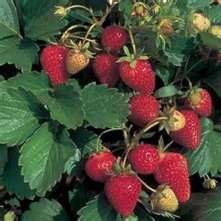
Strawberries fit into one of three varieties:

Everbearing.  Produce smaller berries and lesser harvests 2 or sometimes 3 times throughout the growing season. They shoot fewer runners than June bearing.
Day Neutral strawberries produce throughout the growing season when the temperature is between 35 and 85 degrees.  They shoot few or no runners so would be ideal from container plantings.

 
June bearing.  Large abundant fruit with good runner character.  They shoot healthy runners that encourage new plant growth. 
I have ordered 25 Allstar plants. Harvest lasts two to three weeks, generally during the month of June. They are on the recommended K-State Research list.  It's always a good idea to check these Research and Extension lists for your state. 

My asparagus plants will be from the Jersey series.  They will be all male plants.  My research tells me that 10 plants are sufficient for one person who only wants fresh asparagus.  I am planting 20 plants. They will need to be planted in a long trench.  Stark Brothers Nursery site has a great planting guide if you need one.  Be sure to plant in full sun and remember that after their harvest season, they shoot up beautiful fern fronds.  These can create shade in an area that you might not want shaded.   Once the plants come up later this spring ....... Leave them alone!  Resist harvesting it until the 3rd year and you are good to go for the next 25-30 years!

Trench with asparagus roots ready to plant.


This asparagus after growth can be used in cut flower arrangements!

Rhubarb varieties are a little more tricky.  I have a plant of my mom's that is absolutely ideal.  The flesh is dark red and fairly sweet.  Most importantly, it does not go to seed.  I have no idea what variety it is.  My two new plants are advertised as a close match.  They are Red Scarlet.  We'll see how they work out???


Thursday, January 19, 2012

Dream, dream, dream............


Typically, in January I would encourage you to curl up with an afghan, hot cup of tea and a seed catalog.  During the recent January warm spell, I could have advised you to put your sweatshirt on and take a walk around your yard instead.  I just love this planning part of my gardening year!  We can conjure up all sorts of ideas without all of the actual work (yet) :-)


  However you spend your planning time, I hope you are getting excited about your Spring garden.  The seed catalogs have been arriving since December so you should have your stack by now. I try to grow something different each year.  This year it's going to be okra and blue potatoes.  I confess to not being a huge okra fan although I plan to try some different recipes with it.  My main interest in okra is the plant itself.  I saw two different plantings of it last season and it has a huge presence in the garden.  The foliage and blossoms are gorgeous. 

Row of Okra approximately 5 ft tall
Okra blossom

Blue potatoes have been in the health news lately.  Besides being a nice conversation starter, they are high in antioxidants.  Have you tried them?  I haven't, but I have a small bag on the counter so will be trying them soon!


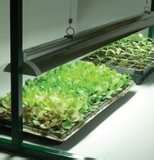
 I admire those of you who order actual seeds to early start vegetables and flowers.  I have spent a respectable amount of early growing seasons trying to start those tiny plants.  When I think about it, starting them isn't the problem.  It's getting them to grow to a transplantable size that gives me heartburn!  I know that some of you have great luck with setting up growing stations on a card table or sunny window seal.  Doesn't work for me.  K-State has instructions for using growing lights with adjustable heights.  This technique would definitely work ........ I don't have a good place to set the system up. 

Adjustable Grow Light

I wish my vegetable garden looked like this!

I order seeds that I can plant directly in my garden soil.  Some flowers, but also cucumber, green beans, beets, greens etc...  Besides the old standby catalogs, I have a few catalogs and websites that I have also successfully ordered and grown from.  I also have a couple of new catalogs that were discussed at our last advanced Master Gardener training and a couple that our County Agent uses.   I will list these below so that you can see what you think of them. 

highcountrygardens.com
jungseed.com
johnnyseeds.com
whiteflowerfarm.com
morgancountyseeds.com
grandpasorchard.com

Again, this is NOT my garden, but oh how I wish it were!  I need to work a little harder to eventually get to this!  Are you noticing that there is a general "mixing" of plants throughout this garden?  I am really liking the interest this creates. 

Thursday, November 3, 2011

Looks like it's time to put our landscapes to bed ............ for the winter.

The last couple of days have brought a change to our Kansas weather.  Dipping temperatures, freezing rain and snow in the west. 


2011 has brought us one of the prettiest Autumn seasons that we have had in awhile.  The yellows are brilliant and the oranges are deep and rusty this year.  I hate to see all this color go away, but go away it will.  Before this season is entirely finished and we're in the deep freeze there are a few things yet that need to be accomplished.


1.  Our nitrogen should be on the lawn by this point in time. 
2.  Until we receive more rain than we have lately, we need to keep 2 year old and younger shrubs and perennials watered.
3.  It's time now, with this cooler weather, to get our yards sprayed for dandelions.  
4.  These beautiful leaves can be raked up and tossed onto the compost pile.
5.  The vegetable garden should be cleaned off and readied for next planting season.
6.  Long rose canes should be trimmed up and compost or mulch applied around the plant base.
7.  If mulch around newly planted shrub beds is getting thin, add more to protect the bed from extreme temperature variations during the winter.
8.  Gather up all of our gardening tools and put them away. 
9.  Drain those garden hoses and put them inside. 
10.  Enjoy this "down" time until it starts all over again next spring!

Tuesday, October 4, 2011

If you haven't already .......... it's time to fertilize.

September has been here and gone!  Hard to believe.  It is now getting towards the last opportunity to get our lawns fertilized.  I cannot put it off any longer so am getting the dry nitrogen on before the rainy weekend hits.  For the last several years, I have used just nitrogen.  I buy it at our local grain elevator for a fraction of the cost of pre-bagged fertilizer.  As you spread it on your lawn, give your shrubs and perenniels a hit as well. This is also the time to feed them. Nitrogen is all that our lawns need right now.  If you really would like to mow a lot in the spring, then you can put another application of the nitrogen on in November.  By putting it on this fall, you will not have to fertilize next spring at all.  You lawn will come up thick and green.  If you put your crab grass killer on in October that will knock your crab grass problems back for next season as well.  You will be finished with lawn maintance for a while.  Enjoy the fabulous weather this week and get something done outside.  We all know that it won't last!   

Saturday, September 24, 2011

Keeping up with the Gardening times...........


Each fall, Kansas State University's Research and Extension department hosts a statewide Master Gardener conference in Manhattan.  This year 270 MG's from across the state gathered for two days of advanced training classes.  Not only is it a wonderful resource for learning new gardening techniques, it is a great time to touch base with old friends.  Often times......... the info exchanged at the coffee tables is as valuable as a formal class! 

Our opening speaker was David Salman, President/Chief Horticulturist from High Country Gardens, Santa Fe, New Mexico.  He has spent over 26 years in pursuit of better plants for western landscapes.  My first mental flash about New Mexico is sand and cactus.  David did a great job of dispelling this idea.  He presented beautiful photos of the mountainous areas around Santa Fe. The key being........ use of plants that readily adapt to the climate with minimum water and care.  Many of these plants will thrive in our Kansas gardens.  I quickly compiled a "mental list" of plants I sure want to try next year.  You will want to check out his catalog and make a list of your own.  You can find the catalog as well as many other facts and photos of High Country Gardens by checking it out on Google. 

Davie Salman, High Country Gardens


Low maintenance garden in Sante Fe, N.M.
High Country Garden catalog
Another program was on Landscaping our home yards with the idea of making up "rooms".  We were instructed to first establish what each area of our yard would function as.  There are three major areas, Private, Service and public. Tips were given as to movement into and through these outdoor rooms.  This is a new program from K-State.  We were their first class presentation. 

Example of a landscape drawing

Color and the use of it was a program presented by Sandy DeFoe.  Many examples of color indoors and out were shown.  We are encouraged to look at upscale fashion, home decorating and gardening magazines to detect colors for the next season.  Not only do the colors of flowers change with the year but also the size and shape of blossoms are ever changing.  Color in our flower beds plays a big part.  Cool colors recede and warm colors jump forward.  If we would like our beds to have the illusion of looking deeper, we could plant cooler blues towards the back of our bed and edge it with a hot orange!  Neat trick hugh?


Basic Color Wheel


If you are seeing a color or design over and over again, you are looking at a current trend.

Paint chips can be a "free" source of playing with color.
 My favorite class this year was Books, Blogs and Columns by Gregg Eyestone, Riley County Horticulture Extension Agent and Dr. James K. Roush, Riley County Master Gardener.  The Extension service has it's blog at rileycountyextension.blogspot.com.  Jim's blog is kansasgardenmusings.blogspot.com.  He has also written a book, Garden Musings.  These are both good blogs and will lead you to many more gardening blogs by checking out the blogs that they subscribe to.  One thing leads to another! 


Another blog that you will enjoy!

Thursday, September 15, 2011

Malabar Spinach

Malabar Spinach is not spinach at all but it sure looks like it and tastes like it!  I stumbled on to it in a seed catalog last winter.  It was billed as being heat tolerant, bolt resistant and would last through out the summer. 

While visiting with some other Master Gardeners, I found out that some of them had seen it growing in Olathe at K-State's demo gardens.  By the time they found it, it was growing huge.  Vining up and spilling over a trellis.  This gave me hope for a successful crop of Malabar of my own.

Not sure why, but mine was slow, slow, slow in taking off.  We had a really diverse (to say the least) growing season so that was likely the problem.  After a bit of babying..... it took off.  It's best to get it training onto a trellis early on.  The mid stem is thick so will break off easily if forced to stand up straight later on. 

Right now we are having lots of Malabar spinach at our table.  The leaves get large and it has a thicker texture to it.  Looks like it was worth messing with all Summer after all!

Thursday, September 1, 2011

Plan for Spring this Fall ........ with perennials

Now is the time to start thinking about your Perennial Gardens for next Spring.  It's time to add new plants that you decide to try.  It's time to divide and transplant those plants that have outgrown their spaces. 

One of our Master Gardener instructors drew the conclusion that the holiday is called "labor day" because this is the time to reseed our lawns and get our perennials started.  Of course he was a bit off base but never the less, I always remember to get started early in the fall season!

The idea is to let these plants have a nice long root growing session before frost.  This reminds me ....... a gal who grows perennial grasses for a living once told me that these grasses do not have long enough legs (roots) to survive fall transplanting well.  She warned that they are best started in the longer growing season of Spring. 

 Once you have your plants in the ground, go ahead and mulch them with a good layer of compost and keep them well watered.  If you have planted something that will die back and will be slow to come back up next Spring it is helpful to place a small wire flag at the site.  Write the plant name on the plastic flag and you'll be set!

Take a walk around your gardens and see if there are overgrown plants that need divided.  If you have your eye on something that your neighbor has offered to share this is the time to do that too.  I have been in several garden centers this week and they are offering beautiful perennials to take home.  Hope you will use this last growing season opportunity to play in the dirt a bit longer!